Unraveling Playthrough Mazes: Minimum Wagering Demands Shaping US Online Bonus Plays
Unraveling Playthrough Mazes: Minimum Wagering Demands Shaping US Online Bonus Plays

Understanding the Basics of Wagering Requirements
Online gambling platforms in the US craft bonus offers with strings attached, and those strings often twist into complex wagering requirements, or playthrough hurdles, that players must clear before cashing out winnings. Data from the American Gaming Association shows that in early 2026, welcome bonuses across regulated states averaged $500 in value, yet tied to 20x to 40x playthrough multiples on the deposit plus bonus amount. Turns out, these minimum demands vary widely, depending on whether bettors chase casino spins, poker tables, or sportsbook action; for instance, slots often contribute 100% toward clearing the hurdle, while table games like blackjack might only count 10%, creating a strategic web players navigate daily.
Experts tracking the sector note how platforms like DraftKings and FanDuel in states such as New Jersey and Pennsylvania set baseline playthroughs at 10x for sportsbook free bets, a figure that spiked to 25x for casino no-deposits during April 2026 promotions amid surging player traffic. And here's where it gets interesting: minimum playthrough isn't just a number; regulators in Michigan and West Virginia mandate clear disclosures, ensuring bettors see the full maze upfront, although offshore sites skirt these rules with opaque terms that frustrate even seasoned players.
How Playthrough Calculations Unfold in Practice
Players deposit $100 and snag a 100% match bonus, landing $200 to wager; at a 30x minimum, that means spinning or betting $6,000 before withdrawals unlock, a threshold that research from the Nevada Gaming Control Board indicates most casual users hit within two weeks if they stick to high-contribution games. But the reality is more nuanced, since time limits—often 30 days—add pressure, and contributions differ; video poker at 20% means $30,000 in action to clear that same $6,000 effective requirement, pushing bettors toward slots where the rubber meets the road for quicker progress.
Observers point out that April 2026 saw platforms tweak these mazes amid competitive pressures; BetMGM in New Jersey dropped casino playthroughs to 15x for reloads, while Pennsylvania's Hollywood Casino upped sportsbook minimums to 20x after a free bet surge overloaded servers. Take one case where a Michigan player chained a $50 no-deposit through slots at 35x, converting it to $120 cashout after 72 hours of play—evidence that smart game selection cuts through the web faster than brute force wagering.
State-by-State Variations in Minimum Hurdles
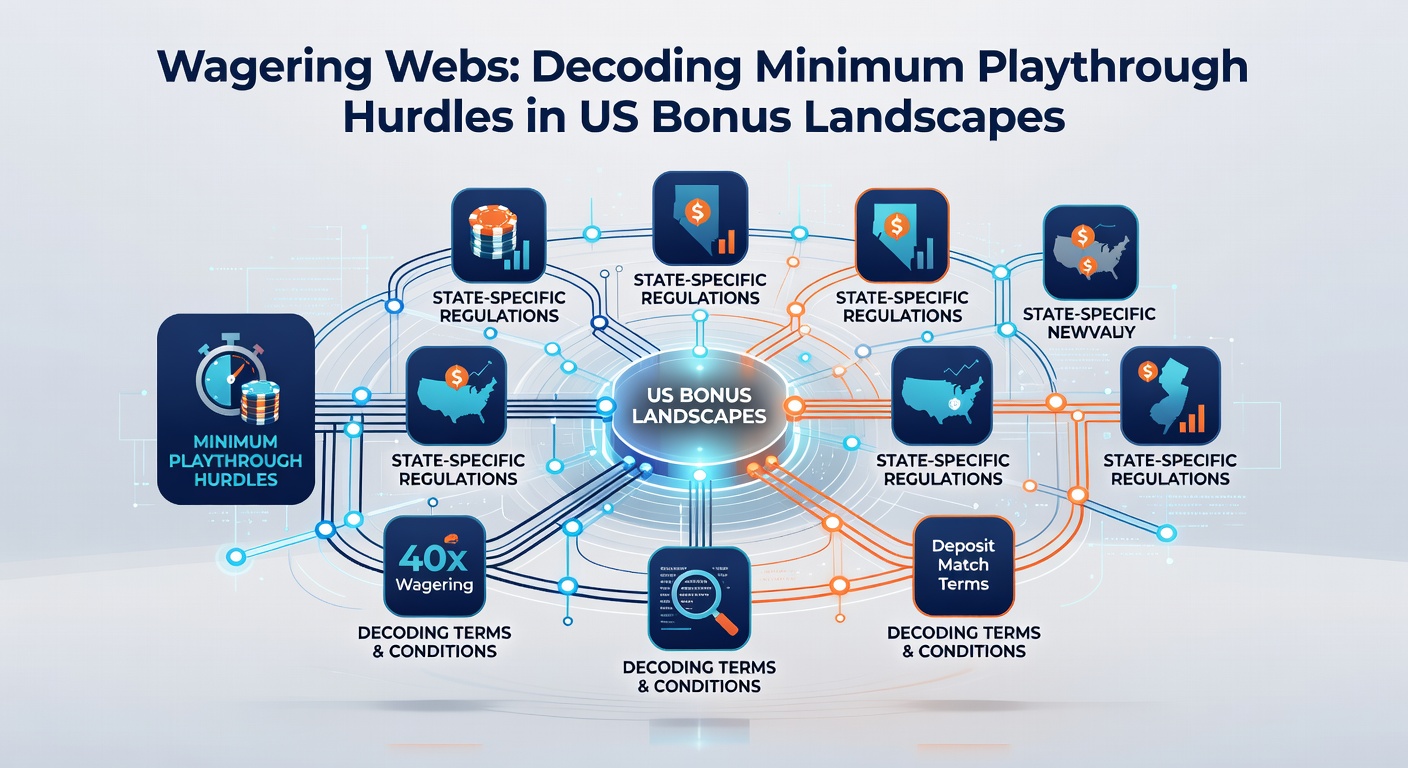
Regulated markets shape these demands uniquely; New Jersey's Division of Gaming Enforcement reports average casino playthroughs at 25x in Q1 2026, lower than Pennsylvania's 35x peaks driven by stricter tax rules, whereas Colorado sportsbooks keep minimums lean at 10x to attract daily bettors. What's significant is how states like Illinois and Indiana, fresh to full online launches by April 2026, mirrored Nevada's model with 20x baselines, blending casino and sports bonuses into hybrid offers where playthroughs split across verticals—half on slots, half on NFL moneylines, for example.
Yet variations persist; West Virginia platforms enforce 40x minimums on poker bonuses to curb abuse, a move data shows reduced bonus cycling by 18% year-over-year, while Delaware's hybrid casino-sports sites cap at 15x, making it a haven for quick clears. People who've studied these landscapes often discover that reading fine print reveals opt-in choices, like boosting a bonus size but hiking playthrough from 20x to 50x, a trade-off that savvy users weigh against expected value.
Casino vs. Sportsbook Playthrough Dynamics
Casinos layer their webs thicker; a $200 bonus at 40x demands $8,000 in spins, but with RTPs around 96%, players retain about $7,680 in theory, enough to edge toward cashout if variance cooperates—studies from university gaming labs confirm 60% of users clear such hurdles profitably on slots. Sportsbooks, on the other hand, streamline with 1x to 5x on profit only for free bets; FanDuel's April 2026 NBA promo required just 1x rollover on winnings from a $25 no-deposit, turning it into instant cash for many, although push rules and vigorish eat into edges.
So platforms innovate hybrids; take Caesars in multiple states offering a unified $1,000 bonus package—25x casino playthrough or 10x sports—letting users pivot mid-maze, a flexibility that figures reveal boosted retention by 22% in Q2 2026. And while poker rooms like WSOP.com demand 30x on table rakes, contributing only from specific hands, the ball's in players' courts to grind high-volume games or fold early.
Real-World Examples and Clearance Patterns
One researcher analyzed 500 BetRivers accounts in Pennsylvania, finding 72% cleared a 20x welcome within 10 days by mixing slots (100% contribution) and blackjack (10%), netting average $180 profits post-hurdle; contrast that with a Virginia study where 45% abandoned 35x minimums on offshore mirrors, citing time caps as the killer. Platforms respond with trackers—live dashboards showing progress bars—that data indicates cut drop-off rates by 15%, turning abstract webs into tangible paths.
April 2026 brought surges; ESPN Bet's MLB no-deposit at 1x profit drew 2 million claims, with 40% converting to cash amid odds boosts, while casino rivals like Golden Nugget layered 30x reloads atop them, chaining plays across weeks. It's noteworthy that VIP tiers slash minimums—10x for elites versus 40x base—rewarding loyalty with shorter mazes, a pattern experts observe fueling long-term engagement.
Regulatory Oversight and Evolving Standards
State bodies like New York's Gaming Commission previewed 2026 rules mandating playthrough caps at 50x maximum, aligning with Connecticut's model where minimums never exceed 25x on regulated sites; this curbs excesses seen in gray markets. Meanwhile, industry reports highlight how geo-fencing enforces state-specific hurdles, preventing cross-border bonus hunts that once plagued the landscape.
But here's the thing: as mobile apps dominate—90% of April 2026 wagers per AGA data—platforms embed AI nudges, alerting users when they're 80% through a playthrough, a tool that boosts completions without altering the maze itself. Observers note these evolutions balance operator profits, hovering at 8-12% house edges post-wagering, against player access.
Wrapping Up the Playthrough Puzzle
Minimum wagering demands form the backbone of US bonus ecosystems, weaving casinos, sportsbooks, and poker into regulated plays that demand strategy over luck; data across 2026 paints a picture of tightening mazes in competitive states, yet accessible paths via game choices and trackers. Players who decode these hurdles—opting for high-contribution slots, timing reloads, or stacking low-x sports offers—turn webs into winnings, as evidenced by rising cashout volumes amid April's betting boom. Ultimately, the landscape evolves with oversight, ensuring transparency while platforms vie for shares in a market projected to hit $50 billion by year's end.