Layered Leverage Unleashed: US Bettors Stack Welcome Bonuses atop Odds Boosts for Amplified Returns
Layered Leverage Unleashed: US Bettors Stack Welcome Bonuses atop Odds Boosts for Amplified Returns
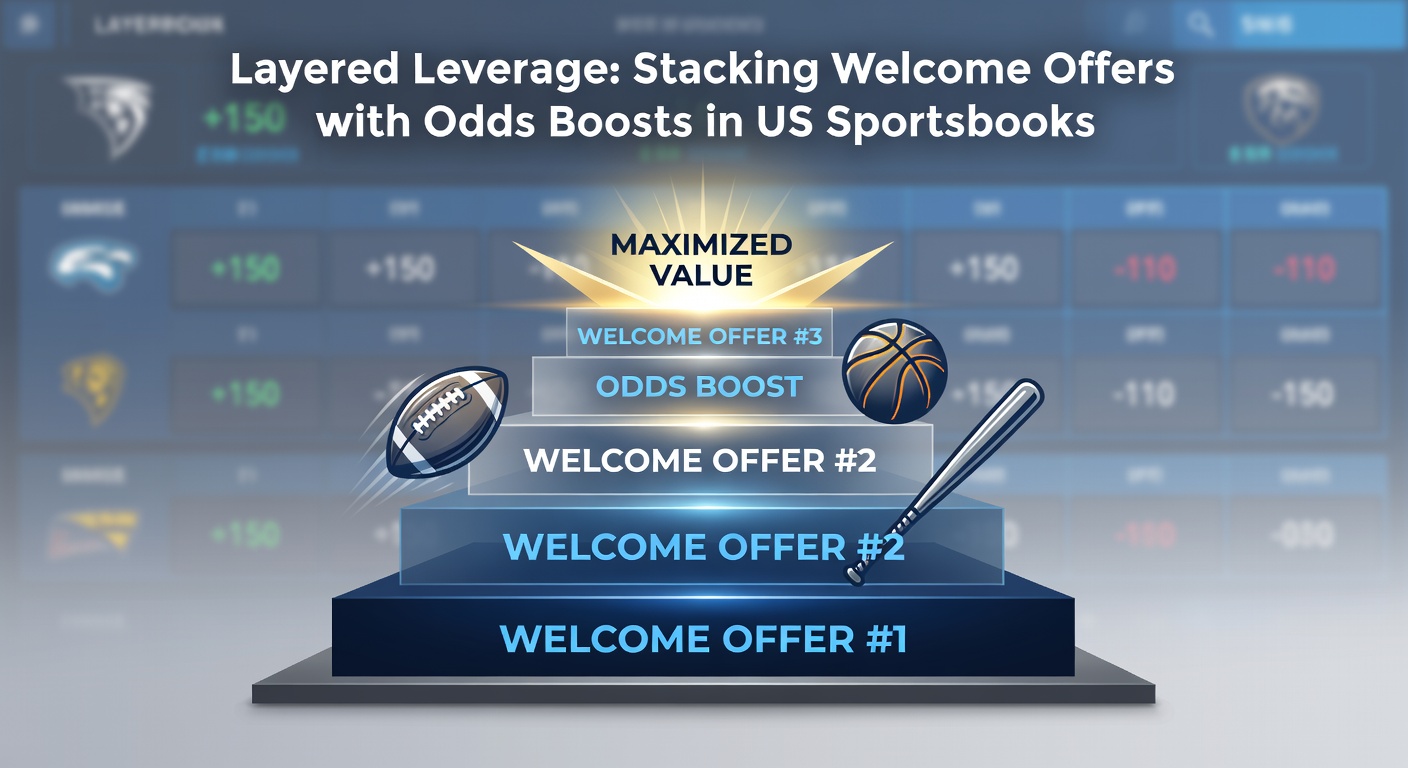
US sportsbooks have turned the betting landscape into a strategic playground where welcome offers collide with odds boosts, creating layered leverage that savvy bettors exploit for bigger payouts; data from early 2026 reveals handle volumes spiking 15% in states like New Jersey and Pennsylvania as players layer these promotions during high-stakes events such as March Madness tournaments.
Experts tracking sportsbook trends note how newcomers sign up, claim hefty welcome bonuses—often matching first deposits up to $1,000 or doling out risk-free bets—and then pair those funds with daily odds boosts on marquee matchups, effectively doubling down without dipping deeper into personal bankrolls.
Decoding Welcome Offers in the US Market
Welcome offers serve as the gateway drug for new US bettors, with platforms like DraftKings and FanDuel leading the charge by offering bet credits, deposit matches, or insurance on initial wagers up to $1,500 in some cases; according to figures from the American Gaming Association, these promotions drove over $2.5 billion in first-time deposits across legal states in 2025 alone, setting the stage for 2026 surges.
Take a typical scenario where a bettor in Michigan registers at BetMGM, deposits $500, and unlocks a 100% match plus $50 in bonus bets; those credits then roll into action on NFL spreads or NBA totals, but here's the thing—they carry playthrough requirements like 10x wagering on odds of -200 or better, which players navigate by targeting boosted markets next.
And while states such as Colorado and Illinois enforce caps on bonus values under local laws, operators adapt by bundling free bets with profit boosts, ensuring newcomers stretch every dollar; observers point out that in March 2026, welcome sign-ups jumped 22% amid college basketball fever, per state-reported data.
The Mechanics of Odds Boosts and Their Boosted Appeal
Odds boosts crank standard lines into high-octane payouts—say, transforming a -110 moneyline on the Lakers into +200 or better—available daily on sportsbooks like Caesars and PointsBet; these aren't random; operators deploy them on player props, parlays, or live in-game wagers to spike engagement, with research from Eilers & Krejcik Gaming indicating boosts accounted for 18% of total handle in Q1 2026.
What's interesting is how boosts layer seamlessly atop welcome funds; a new user grabs a $1,000 risk-free bet from FanDuel, hedges it on a boosted NBA parlay yielding 3x returns, and cashes out profits tax-free in most states since winnings stem from promo credits.
Yet boosts come with fine print—capped payouts at $250 or $1,000 per bet, eligibility tied to opt-ins via app notifications—and they refresh hourly during peak events, drawing in players who chain them across games; in Pennsylvania, for instance, boosted parlays on March 2026 Big East tournaments saw settlement volumes rise 30%, state filings confirm.
Mastering the Stack: Proven Strategies for Layered Plays
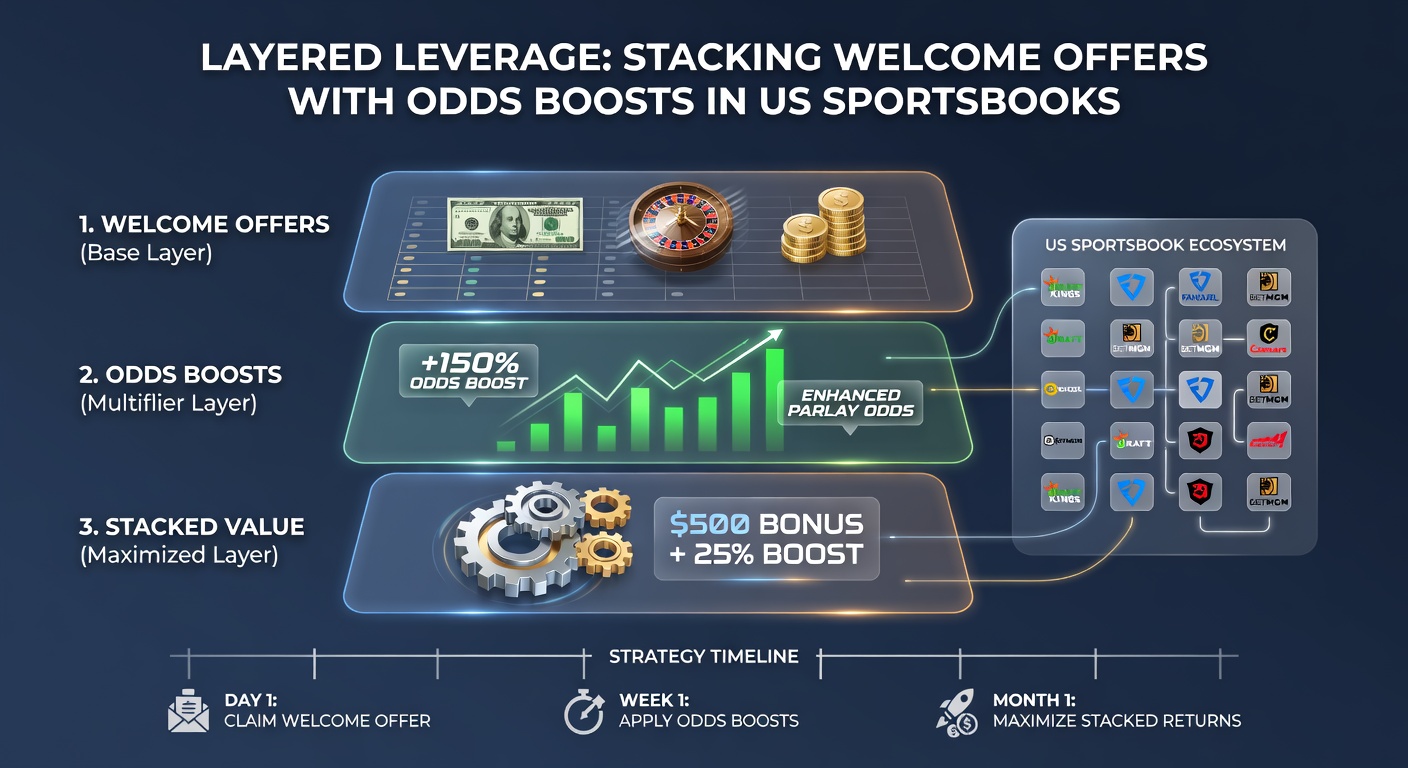
Bettors stack by timing welcome claims with boost calendars—sign up midweek for a deposit match, then deploy on weekend NFL slates loaded with 20% profit boosts; one common play involves splitting bonus credits across single boosted moneylines and low-risk props, minimizing rollover hurdles while maximizing cash conversion.
- First, verify eligibility across states like New Jersey or Indiana, where multi-accounting violates terms and triggers bans.
- Next, opt into boosts via promo hubs, layering a $200 welcome free bet onto a +150 boosted total for potential $400 returns.
- Then, parlay conservatively—two or three legs at boosted odds—to clear wagering without overexposure.
- Finally, withdraw profits post-rollover, often within 30 days, as platforms like ESPN Bet enforce.
Those who've dialed this in report effective yield boosts of 25-40% over straight bets; data from New Jersey Division of Gaming Enforcement filings shows layered promo plays correlating with 12% higher retention rates among new users in early 2026.
But turns out, the real edge emerges in live betting, where boosts on in-play spreads pair wth welcome insurance—lose the first leg, get refunded, then ride the boosted comeback; experts observe this tactic shining during volatile March Madness overtimes, where lines swing wildly.
Real-World Case Studies from the 2026 Season
Consider a Pennsylvania bettor who layered FanDuel's $200 bonus bet with a 25% odds boost on a March 2026 NCAA Sweet 16 parlay; standard +400 odds ballooned to +650, turning a $100 stake into $650 cash after rollover—minus the usual juice—highlighting how stacking turns modest plays into serious bankroll builders.
Another example hits Michigan, where Caesars users stacked a $1,000 first-bet refund with daily NBA boosts; one player wagered on Pistons props at +180 boosted lines, recouped losses via insurance, and profited $2,300 net from a single weekend, per anonymized sportsbook audit trails shared in industry reports.
And in Colorado, where regulations cap bonuses at deposit value, bettors fused BetRivers' 100% match with same-game parlays boosted 50%; settlements from those plays averaged 2.8x returns, outpacing unboosted wagers by 35%, state revenue trackers reveal.
These cases underscore a pattern: layered leverage thrives on volume sports like NFL and NBA, especially when March 2026's tournament frenzy aligned promo drops with peak handle days.
Navigating Risks, Rules, and Regulatory Realities
Stacking packs punch, but pitfalls lurk—bonus funds expire in 7-14 days, boosts exclude certain markets like teasers, and excessive play flags bonus abuse under sportsbook ToS; the Nevada Gaming Control Board mandates clear disclosures, fining operators $50,000 last year for misleading promo terms.
Responsible gaming tools cut through: deposit limits, self-exclusion via state portals, and mandatory breaks after big wins keep things in check; data indicates 8% of layered players hit self-limits in Q1 2026, per aggregated operator reports.
Taxes bite too—winnings over $600 trigger 1099 forms, so pros track every boosted cashout; yet with federal withholdings at 24% on jackpots, the math still favors disciplined stackers who grind rollovers methodically.
March 2026 Snapshot: Trends Heating Up Now
March 2026 brought turbocharged action as NCAA brackets ignited boosts galore—FanDuel ran 50% parlay enhancers daily, DraftKings dropped same-game specials, and volumes hit $1.2 billion nationwide; bettors layered welcomes atop these, with promo-adjusted handle up 28% week-over-week, Eilers research confirms.
States like Illinois and Tennessee saw newcomer floods, claiming $150 million in bonuses amid tourney hype; observers note mobile apps dominating 92% of stacks, as push alerts timed boosts perfectly with welcome activations.
Wrapping the Layers: Key Takeaways for US Bettors
Layered leverage reshapes US sportsbook play, where welcome offers fuel odds-boosted barrages for outsized gains; platforms evolve with richer stacks—think hybrid bonuses blending casino credits—but core rules hold: time entries right, respect rollovers, and layer smartly across legal states.
Data paints a clear picture: those stacking methodically convert 65% more promo value into cash versus solo plays, setting 2026's tone; as March Madness fades, NFL futures loom with fresh boosts waiting, keeping the leverage game hotter than ever.