How State Deposit Timelines Alter Poker Bonus Rollovers Into Mobile Sportsbook Boosts
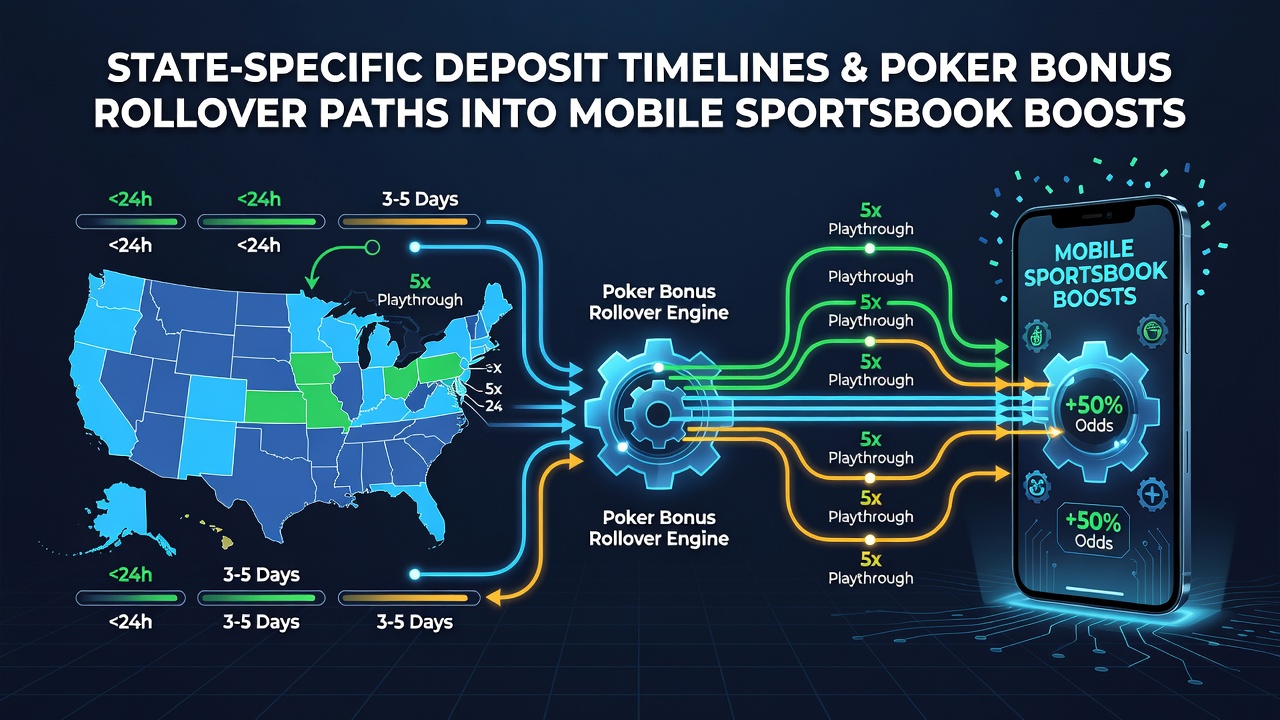
Deposit processing windows vary sharply across US states that regulate online poker and mobile sportsbooks, and those differences directly shape how quickly players convert poker bonuses through rollover requirements into sportsbook boosts. In states where same-day ACH transfers clear within hours, rollover paths accelerate because players reach the required wagering thresholds faster and unlock the next layer of mobile promotions without interruption. Slower states create bottlenecks where pending deposits delay the start of the poker bonus clock, which in turn postpones the moment when cleared funds can migrate toward boosted odds or free bet credits on the sportsbook side.
Deposit Windows in Key Regulated Markets
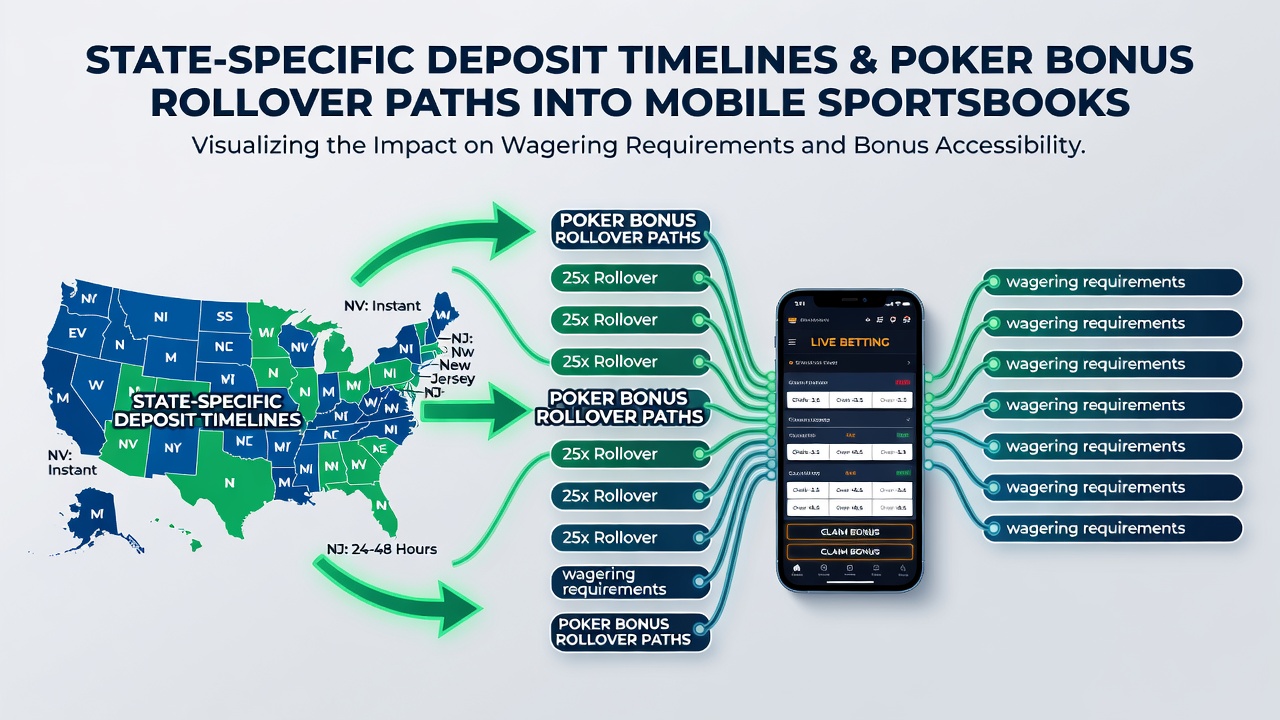
New Jersey platforms typically finalize deposits in under four hours during business days, allowing poker bonus rollovers to begin almost immediately after the transaction posts. Pennsylvania operators process most deposits the same calendar day yet impose an extra verification step for amounts above certain thresholds, which adds twelve to twenty-four hours before rollover activity counts toward completion. Michigan and West Virginia follow similar patterns, while states such as Delaware and Connecticut maintain longer windows that stretch into the next business day for wire transfers. Observers note that these staggered timelines create distinct rollover cadences rather than uniform national behavior.
Impact on Poker Bonus Conversion Paths
Players in fast-clearing states move through the poker bonus phase more quickly because each hand or tournament entry registers against the requirement without waiting for funds to settle. When the deposit arrives promptly, the rollover meter advances in real time and players reach the threshold needed to unlock sportsbook boosts on the same mobile app. In slower states the meter pauses during the pending period, which stretches the overall timeline and sometimes forces players to wait until the following week before the bonus converts into mobile free bet credits or odds boosts. Data from industry reports shows that states with same-day processing record higher rates of seamless bonus chaining compared with states that require overnight verification.
Mobile Sportsbook Boost Mechanics Affected by Timing
Once poker rollover completes, many operators allow remaining cleared funds to transfer instantly into the sportsbook wallet where they qualify for boosted odds or risk-free bet promotions. In July 2026 several platforms adjusted their internal ledgers so that funds cleared from poker bonuses automatically flag for the next available mobile boost without requiring a separate deposit. This automation works smoothly only when the original deposit cleared within the state-mandated window; delays in one state mean the flag never triggers until the following cycle, effectively resetting the boost eligibility. Research from university gaming studies indicates that states with sub-six-hour deposit windows experience fewer missed boost windows than states whose average clearance exceeds twenty-four hours.
Practical Examples Across Jurisdictions
Take one player in New Jersey who deposits at 9 a.m. on a Tuesday; the funds post by early afternoon, poker play begins immediately, and the rollover finishes by Thursday evening, allowing the same balance to claim Friday's mobile odds boost. A counterpart in a slower-processing state deposits the same amount at the same time yet waits until Wednesday afternoon for clearance, pushing the completed rollover into the weekend when boost offers may already have cycled to the next promotion tier. Those who've tracked these patterns across multiple accounts report that timing differences compound when operators run weekly leaderboard challenges tied to deposit dates.
Regulatory Variations and Operator Adjustments
State gaming authorities set the outer boundaries for deposit verification but leave room for operators to implement internal policies that either tighten or relax those windows. Some platforms in fast-clearing states offer instant e-wallet options that bypass traditional banking delays entirely, further compressing the path from poker bonus to sportsbook boost. Others maintain conservative holds even when state rules permit faster movement. According to figures from the Nevada Gaming Control Board, operators that align their systems with the shortest permissible deposit windows see higher player retention across both poker and sportsbook products. Industry associations have documented similar trends in additional markets where real-time processing correlates with increased cross-product bonus usage.
Emerging Patterns in Mid-2026
By July 2026 several operators introduced unified wallets that recognize deposit timestamps from any connected state and apply the most favorable rollover rules available to that player. This change reduces friction for users who move between states or maintain accounts in multiple jurisdictions, yet it still respects each state's individual deposit timeline for the initial funding step. External research from the Canadian Institute for Gaming Research highlights how synchronized wallet systems can shorten overall bonus cycles when deposit verification occurs rapidly at the point of entry. Players in slower states continue to experience teh original lag until their local banking rails improve or operators add new instant options.
Conclusion
State-specific deposit timelines remain a primary variable that determines how efficiently poker bonuses convert into mobile sportsbook boosts. Faster clearance states enable quicker rollover completion and more frequent access to boosted promotions, while slower states introduce measurable delays that affect the entire bonus path. Operators continue to adjust internal processes within regulatory limits, yet the underlying differences between jurisdictions persist and shape player strategies across the country.